
You’ve finished the work, but creating a proper invoice feels like navigating a legal minefield; one wrong move, and you’re either delaying payment or risking compliance issues.
Learning how to create business invoices correctly means getting paid faster, staying legally compliant, and looking professional to your clients.
Did you know that businesses using optimized invoices get paid up to 18 days faster than those using basic templates? With new tax regulations in 2026 and rising payment disputes, proper invoicing isn’t optional; it’s essential for survival.
This guide walks you through everything from legal requirements to choosing the right tools, ensuring every invoice you send gets you paid on time.
Key Takeaways
- The 10 non-negotiable elements every legally compliant invoice must include
- How to choose between free templates, online generators, and full accounting software
- Industry-specific invoice requirements for freelancers, contractors, and e-commerce businesses
- Proven strategies to get paid 12-18 days faster with better invoices
- Step-by-step processes for handling taxes, payment terms, and late-paying clients.
What Is a Business Invoice and Why Does It Matter?
A business invoice is a legal document requesting payment for goods or services provided. It serves three critical functions: a formal payment request, an accounting record, and legal proof of the transaction. For small businesses, proper invoicing is essential for cash flow management, tax compliance, and professional credibility with clients.
A business invoice isn’t just a fancy receipt; it’s a legally enforceable payment demand. When you issue an invoice, you’re creating a binding agreement that your client owes you money by a specific date. This legal weight makes invoices crucial for dispute resolution and collections.
Here’s how invoices differ from similar documents:
Invoice vs. Receipt vs. Estimate
- Invoice: Sent before payment, requests money owed, legally binding
- Receipt: Sent after payment, confirms transaction completed, proof of purchase
- Estimate: Sent before work begins, project costs, not legally binding
Think of it this way: estimates win the job, invoices collect the money, and receipts close the books.
Why proper invoicing matters to your bottom line?
Invoices are vital for cash flow. QuickBooks research shows that detailed invoices lead to payments 17.5 days faster.
They are also important for tax records; the IRS requires you to keep invoices for at least 3 years (7 years recommended) to substantiate deductions and track accounts receivable accurately.
Invoices also offer legal protection. A detailed invoice can serve as evidence in court if a client refuses to pay, unlike vague bills or verbal agreements.
For accountants, teaching clients proper invoicing can save time during reconciliation and tax preparation.
What Are the Legal Requirements for Business Invoices?
Legal invoice requirements vary by location and business type, but U.S. invoices must include, at a minimum, your business name and address, client details, a unique invoice number, date, itemized services with amounts, and the total due.
State-specific requirements include tax ID numbers, sales tax breakdowns, and specific payment term language. Non-compliance can result in payment disputes, tax penalties, and invalidated documentation.
1. Federal requirements come from the IRS
The IRS doesn’t offer a specific invoice template, but Publication 583 outlines key record-keeping. Your invoice must include your business name, transaction details, amount, and date for income reporting and expense deductions.
For business clients or government contracts, use your Employer Identification Number (EIN) on invoices. Sole proprietors can use their Social Security Number, but it’s better for privacy to avoid it.
2. State requirements add another layer
Sales tax rules vary by state. In California, you must clearly state sales tax charges and include your seller’s permit number. In Texas, service businesses typically do not collect sales tax, but product businesses do. New York has specific wording requirements for sales tax.
Some states require you to disclose payment terms. For example, many states require you to inform customers about late fee policies upfront; you cannot add them later. Check your state’s Department of Revenue website for the most current requirements.
3. Industry-specific regulations matter too
Contractors often need contractor license numbers on invoices. Healthcare providers must include specific insurance codes. Government contractors must follow strict invoicing requirements under the Federal Acquisition Regulation (FAR).
According to the American Institute of CPAs (AICPA), one of the most common small business mistakes is using invoices that don’t meet local tax authority requirements. This becomes especially risky during audits when you need to prove income and deductions.
4. International considerations for cross-border invoicing
If you invoice clients in other countries, you’re dealing with VAT (Value Added Tax) instead of sales tax. The EU requires specific invoice elements, including your VAT identification number and the buyer’s VAT number for B2B transactions. The reverse charge mechanism shifts tax responsibility to the buyer in many cases.
5. Consequences of non-compliance aren't worth the risk
Invalid invoices can be rejected by clients’ accounting departments, delaying your payment indefinitely. During IRS audits, missing documentation means lost deductions; you can’t claim income or expenses you can’t prove. Some states impose penalties for improper sales tax collection, ranging from fines to license suspension.
What Are the 10 Essential Elements Every Business Invoice Must Include?
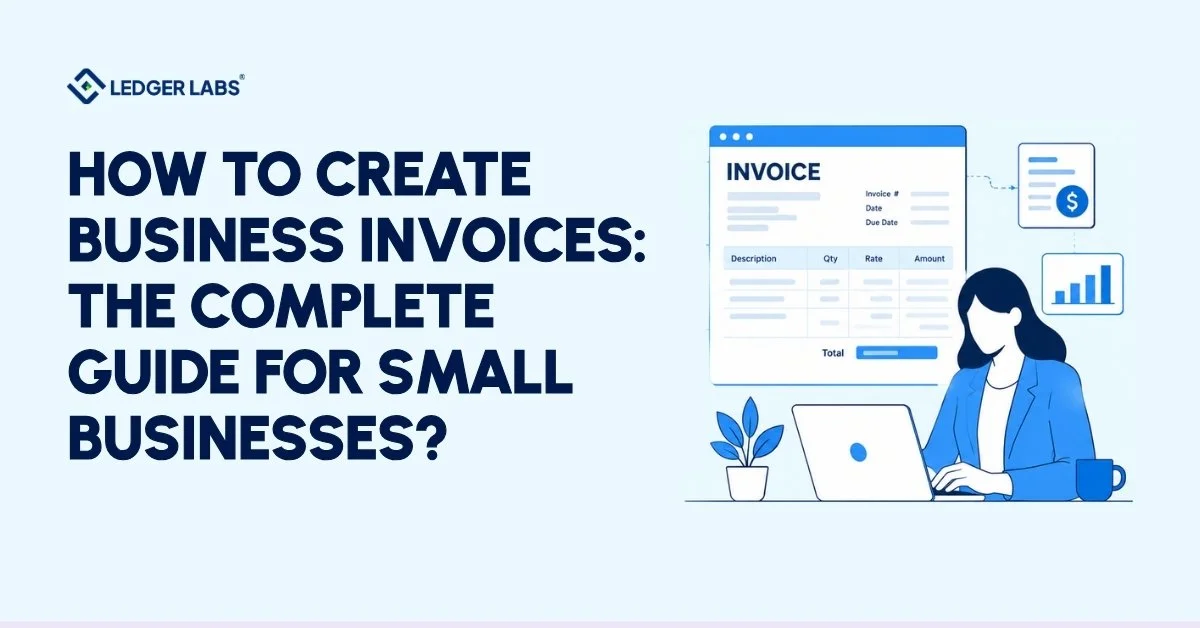
A professional invoice must include the following essential elements: a clear “INVOICE” header with branding; a unique invoice number; complete business and client information; issue and due dates; itemized line items with descriptions, quantities, and unit rates; subtotals with taxes; a bold total amount due; and payment terms. Missing any of these can delay payment or invalidate the invoice.
Here’s exactly what belongs on every invoice you create:
1. Invoice Header and Business Branding:
Your invoice needs a clear “INVOICE” label at the top, not “Bill” or “Payment Request.” Include your logo if you have one.
This immediately identifies the document type and reinforces your professional brand.
2. Unique Invoice Number:
Use a sequential numbering system, such as INV-2026-001 or 20260115-001. Never skip numbers or reuse them. This tracks your invoices for accounting and prevents duplicate billing accusations.
3. Your Business Information:
Include your legal business name, complete address, phone number, email, and website. Add your EIN or tax ID when required. Clients need this to process payments and file their own tax records.
4. Client Billing Information:
List your client’s name, company (if applicable), billing address, and contact details. Double-check spelling; one wrong letter in the company name can send your invoice to the wrong department for weeks.
5. Date Information:
Show both the invoice issue date and the payment due date. Don’t just write “Net 30”, calculate the actual calendar date payment is due. Clarity prevents the “I didn’t know when it was due” excuse.
6. Itemized Line Items:
Describe each service or product specifically. Compare these examples:
- Bad: “Consulting services – $5,000.”
- Good: “Brand strategy consultation (3 sessions, 2 hours each) – $5,000”
Vague descriptions invite questions. Detailed descriptions get approved faster.
7. Quantities and Unit Rates:
Break down pricing clearly: “10 hours @ $150/hour” or “5 units @ $200/unit.” This transparency builds trust and makes your pricing defensible if questioned.
7. Quantities and Unit Rates:
Break down pricing clearly: “10 hours @ $150/hour” or “5 units @ $200/unit.” This transparency builds trust and makes your pricing defensible if questioned.
8. Calculations with Tax Breakdown:
Show your subtotal before taxes, then itemize each tax separately:
- Subtotal: $5,000
- State sales tax (6.5%): $325
- Local tax (1%): $50
- Total tax: $375
Never hide taxes in the total; it looks dishonest and can violate state laws.
9. Total Amount Due (Bold and Clear):
Your final total should be the largest, boldest number on the invoice. Include the currency (USD, EUR, etc.) to avoid confusion, especially with international clients.
10. Payment Terms and Methods:
Specify accepted payment methods (check, ACH, credit card, PayPal), where to send payment, and your late fee policy.
Example: Payment due within 30 days. Late payments are subject to 1.5% monthly fee.
How Do I Create a Business Invoice in 6 Simple Steps?
To create a business invoice, choose a creation method (software, template, or manual) and set up your branded template with your business details. Enter the client’s information accurately, assign a unique invoice number, and set clear dates. Itemize services or products with descriptions and pricing, then calculate the totals, including taxes, add payment instructions, and send the invoice. Once your system is ready, most invoices take only 5-10 minutes to complete.
Step 1: Choose Your Invoice Creation Method
You have three main options for creating invoices:
- Invoice software (QuickBooks, FreshBooks, Xero) – Best for 10+ invoices monthly
- Free templates (Word, Excel, Google Docs) – Best for occasional invoicing
- Manual invoice books – Outdated but still legal
Start with free templates if you’re just beginning. You can always upgrade to the software later when your invoice volume increases.
Step 2: Set Up Your Reusable Invoice Template
Build one master template and include:
- Your business logo and letterhead
- Pre-filled name, address, and contact information
- Standard payment terms and accepted methods
- Tax calculation formulas (if using Excel/Sheets)
Save this as “Invoice Template Master.”
Every new invoice starts with this template, saving you 5-10 minutes per invoice. Never create invoices from scratch; it wastes time and increases errors.
Step 3: Fill in Business and Client Information
Open your template and add the client’s billing details:
- Legal company name (spell it exactly as they do)
- Complete billing address
- Accounts payable contact name and email
- Purchase order number (if required)
Note: Send invoices to accounts payable, not your main contact. This prevents 2-3 week payment delays.
Step 4: Add Invoice Number and Dates
Assign sequential invoice number:
- If your last invoice was INV-2026-015, this one is INV-2026-016
- Never skip numbers (creates audit red flags)
- Never reuse numbers (creates duplicate billing confusion)
Set clear dates:
- Issue date: Today’s date
- Due date: Calculate the actual calendar date
Example: Today is January 15, 2026, and you offer Net 30 terms. Write “Payment due: February 14, 2026”, don’t just write “Net 30.”
Step 5: Itemize Your Services or Products
Write specific, detailed line items that justify every dollar:
Good example:
“Website homepage design – 12 hours @ $100/hr – $1,200”
Better example:
“Homepage redesign including wireframes, mockups, and 2 revision rounds – 12 hours @ $100/hr – $1,200”
Bad example:
“Design work – $1,200”
The more detailed your descriptions, the fewer questions you’ll receive and the faster you’ll get paid. Accounts payable departments hold vague invoices in “pending clarification” for weeks.
Step 6: Calculate Totals and Add Payment Instructions
Calculate your totals:
- Add line items for the subtotal
- Apply applicable taxes (verify current state/local rates)
- Show discounts as separate line items (if any)
- Bold the final total amount
Include clear payment instructions below the total:
- Accepted methods: Check, ACH transfer, credit card via [link], PayPal
- Where to send payment: Mailing address or payment portal URL
- Late fee policy: Payments over 30 days incur 1.5% monthly late fee
- Early payment discount (optional): 2% discount if paid within 10 days
Send immediately: Invoice within 24 hours of completing work. Research shows businesses that invoice immediately get paid significantly faster than those who wait even a few days.
According to IRS Publication 583, detailed itemization on invoices provides clear documentation that supports proper record-keeping and helps prevent disputes during audits or payment processing.
What Invoice Tools Should I Use?
Small businesses can create invoices with free templates (Word, Excel, Google Docs), online generators (QuickBooks, FreshBooks, Zoho), or accounting software. Use templates for under 10 invoices monthly, generators for 10-50, and software for over 50. Ensure proper invoice numbering, software auto-numbers, while templates need manual numbering (e.g., INV-2026-001).
1. Free Template Options (Best for Under 10 Invoices Monthly)
Microsoft Word, Excel, and Google Docs all offer free invoice templates you can download and customize. These templates include all the essential fields; you just fill in the blanks.
Pros: Zero cost, simple to use, no learning curve, works offline
Cons: Manual calculations, no automatic tracking, no payment reminders, requires a manual filing system
Templates require you to create your own invoice numbering system. Use this format: INV-[YEAR]-[3-digit sequence]. Your first 2026 invoice becomes INV-2026-001, the second is INV-2026-002, and so on.
Keep a simple spreadsheet tracking which invoice numbers you’ve used. Never skip numbers or reuse them; this creates audit problems and looks unprofessional. Options like InvoiceSimple’s templates include classic, minimalist, commercial, and service formats, all print-friendly and built with essential fields plus automatic subtotal and total calculations. You can open them in Word, Excel, Google Sheets, or PDF, then tweak colors, line items, and taxes to speed up manual invoicing without sacrificing consistency.
2. Online Invoice Generators (Best for 10-50 Invoices Monthly)
Tools like QuickBooks Invoice Generator, Zoho Invoice, and Wave Invoicing sit between free templates and full software. They generate professional invoices, store them in the cloud, and often include basic tracking features.
Pros: Professional templates, automatic calculations, cloud storage, some payment tracking, often free for limited use
Cons: May require account creation, limited features on free plans, and less customization than full software
These generators automatically assign sequential invoice numbers, eliminating manual tracking. They’ll also calculate taxes based on your settings and keep a running list of sent invoices.
Invoice generators eliminate repetitive manual work by automatically saving client details, calculating taxes, and tracking sent invoices, saving hours each month on administrative tasks.
Full Accounting Software (Best for 50+ Invoices Monthly)
QuickBooks Online, FreshBooks, and Xero offer complete financial management including invoicing, payment tracking, automated reminders, and integration with bank accounts.
Pros: Complete financial picture, automated everything, client portals, recurring invoices, detailed reporting, tax-ready records
Cons: Monthly subscription cost ($15-$50+), steeper learning curve, might be overkill for simple needs
Full accounting software justifies the investment when invoicing becomes a significant time drain or when you need integrated financial reports. If you spend more than 5 hours monthly on invoicing and payment tracking, the software pays for itself in time savings.
How Should Different Industries Create Invoices?
Invoice requirements vary significantly by business type. Freelancers need detailed hourly breakdowns and project descriptions. Contractors must separate materials costs from labor and include permit numbers.
Service businesses itemize by service type and date ranges. E-commerce invoices require product SKUs, quantities, and shipping details. Using industry-appropriate formats ensures faster payment approval and professional credibility with clients.
Freelance Invoices (Writers, Designers, Consultants)
Freelancers typically bill by the hour or by project milestone. Your invoice needs to justify every dollar because clients want to know exactly what they’re paying for.
What to include:
- Project name or client reference number
- Detailed time breakdown: “Logo design – 8 hours @ $125/hr”
- Specific deliverables: “3 concepts, 2 revision rounds”
- Work dates or date range
Common mistake: Writing “Consulting – $5,000” without any breakdown creates questions and delays.
Instead, write: “Brand positioning strategy – Initial research (6 hours), Client interviews (4 hours), Strategy document creation (8 hours), Presentation prep (2 hours) – 20 hours total @ $250/hr”
For retainer clients, specify coverage: “Monthly retainer – 20 hours content writing, up to 4 blog posts, unlimited revision rounds.”
Contractor Invoices (Construction, Plumbing, Electrical)
Contractors face stricter requirements because they’re billing for both materials and labor, often involving permits and licenses.
What to include:
- Contractor license number (required in most states)
- Job site address
- Permit numbers, if applicable
- Materials costs are itemized separately from labor
- Labor broken down by worker and hours
- Any subcontractor costs
- Retainage amounts (common in construction)
Example line items:
- Materials: “2×4 lumber (200 linear feet @ $2.50/ft) – $500”
- Labor: “Framing work (24 hours @ $75/hr) – $1,800”
- Permits: “Building permit #2026-1234 – $350”
Contractors who separate materials from labor reduce payment disputes and provide clients with transparent cost breakdowns that speed approval.
Service Business Invoices (Cleaning, IT Support, Marketing Agencies)
Service businesses often work with recurring clients and packaged services. Your invoices should reflect whether you’re billing hourly, by package, or on retainer.
What to include:
- Service dates or date range
- Specific services performed
- Hourly rates or package pricing
- Any additional/one-time charges are separately listed
Package billing example:
- “Monthly IT Support Package – Standard tier – $500”
- “Additional services this month:”
- “Emergency server repair (3 hours @ $150/hr) – $450”
- “New workstation setup – $200”
For recurring services (cleaning, maintenance), state the service period clearly: “Weekly office cleaning – January 2026 (4 visits)”.
E-commerce Invoices (Online Retail, Shopify Stores)
E-commerce invoices are more transactional but need specific product details for inventory tracking and returns processing.
What to include:
- Product names and SKU numbers
- Quantity ordered
- Unit price and total per product
- Shipping method and cost
- Sales tax by jurisdiction (important for multi-state sellers)
- Return policy statement
Example format:
- “Product: Leather Messenger Bag – SKU: BAG-001 – Qty: 2 @ $89.99 – $179.98”
- “Shipping: USPS Priority Mail – $12.50”
- “Sales Tax (California 7.25%) – $13.95”
E-commerce platforms like Shopify and WooCommerce automatically generate invoices. Verify they include all required elements for your state’s sales tax reporting.
Consulting Invoices (Management, Strategy, Professional Services)
Consultants often work with retainers, milestone billing, or value-based pricing. Your invoice needs to connect billing to the agreed-upon scope.
What to include:
- Reference to the original proposal or contract
- Milestone or phase description
- Deliverables completed
- Expense reimbursements are itemized separately
- Retainer balance if applicable
Example:
- “Project: Digital transformation strategy – Phase 2: Implementation planning”
- “Deliverables: Process mapping (complete), Technology assessment (complete), Implementation roadmap (in progress)”
- “Professional fees: $15,000 (per MSA dated 11/15/2025)”
- “Reimbursable expenses: Travel to client site – $450”
Consulting firms that reference original proposals or contracts in their invoices experience fewer payment questions and faster approval from client accounting departments.
What Invoice Mistakes Cost You Money?
Common invoice mistakes include missing numbers, vague descriptions, incorrect taxes, and wrong client information. These can delay payments and complicate audits. Prevent them by using templates, implementing a numbering system, double-checking details, and following pre-send checklists.
Mistake 1: Missing or Duplicate Invoice Numbers
Every invoice needs a unique number. Never skip or reuse numbers. During IRS audits, gaps in your sequence or duplicate numbers raise red flags about unreported income.
Solution: Use sequential numbering from day one. Software handles this automatically. With templates, maintain a tracking spreadsheet with your last used number.
Mistake 2: Vague Service Descriptions
“Consulting – $5,000” tells clients nothing and invites questions. Accounts payable departments hold vague invoices in “pending clarification” for weeks.
The fix: Be specific about deliverables.
Bad: “Website work – $10,000”
Good: “E-commerce website development: Homepage design (12 hours), Product page templates (16 hours), Shopping cart integration (10 hours), Quality testing (4 hours) – 42 hours @ $238/hr”
More detail = fewer questions = faster payment.
Mistake 3: Incorrect Tax Calculations
Manual math errors are common. Calculate 7.5% tax on $2,000, accidentally write $170 instead of $150. Client catches it, questions everything, and your invoice sits in dispute.
Solution: Always use software or spreadsheet formulas. Excel, Google Sheets, or invoice generators eliminate calculation errors completely.
Even a $10 error can look unprofessional and make clients question your accuracy.
Mistake 4: Missing or Unclear Payment Terms
Invoices without due dates get paid whenever clients feel like it, usually 60+ days later. Invoices with clear terms get paid faster.
The fix: Always include:
- Exact due date: “Payment due February 28, 2026” (not just “Net 30”)
- Accepted payment methods
- Where/how to send payment
- Late fee policy (if applicable)
Mistake 5: Wrong Client Information
Send an invoice to the wrong department or with a misspelled company name, and it bounces back and forth for weeks. Large companies route strictly; accounts payable won’t process invoices addressed to operations.
Solution: Maintain a client database with verified billing information. Before sending, confirm:
- Correct legal company name (spell it exactly as they do)
- Proper billing department and address
- Accounts payable contact name and email
- Purchase order number (if required)
One typo delays payment by 2-3 weeks.
Mistake 6: Sending Invoices Late
The longer you wait after completing work, the longer you wait to get paid. Clients forget details, question charges, and prioritize newer invoices.
The fix: Invoice immediately after delivery. Same day, if possible; within 48 hours at the latest. Set daily reminders or block time for invoicing.
Mistake 7: No Follow-Up System
Creating perfect invoices means nothing if you don’t follow up when payment is late. Most small businesses wait and hope, then panic at 60 days.
Solution: Create a follow-up schedule:
- Day -3: Friendly reminder before due date
- Day 0: “Due today” reminder
- Day +7: “Past due” notice
- Day +14: Direct phone call + email with late fees
- Day +30: Final notice before collections
Businesses with structured follow-up processes collect overdue payments faster than those with ad-hoc approaches.
Conclusion
Creating business invoices doesn’t have to be complicated when you have the right system. Start with a solid template that includes all 10 essential elements, choose the right tool for your invoice volume, and customize the format for your specific industry. Implement clear payment terms and systematic follow-up processes to ensure consistent payment.
The difference between businesses that struggle with cash flow and those that get paid on time often comes down to invoicing discipline. Send invoices immediately after completing work, make them detailed and professional, offer multiple payment methods, and don’t hesitate to follow up when payments are late.
Still overwhelmed by setting up compliant invoice systems?
Schedule your free consultation today and learn how we can customize our services to meet your unique needs.
FAQs
Q: Can I create a business invoice without software?
Yes, you can use free templates from Microsoft Word, Excel, or Google Docs. Just download a template, fill in your business and client details, add line items, and save as a PDF. This works great if you’re sending fewer than 10 invoices per month.
Q: How much should I charge for invoice creation services as an accountant?
Most accountants charge per invoice or offer monthly packages for ongoing management, and many bundle bookkeeping with invoicing. Complex invoicing, such as progress billing or multi-currency, usually costs more per invoice.
Q: What's the difference between creating an invoice and an estimate?
An invoice requests payment for completed work and is legally binding. An estimate is a price proposal before work starts and isn’t legally binding. Invoices say “amount due” while estimates say “estimated cost.” Many businesses send estimates first, get approval, and then invoice after completing the work.
Q: Do I need to keep copies of all business invoices I create?
Yes, the IRS requires you to keep invoices for at least 3 years, though 7 years is recommended. Store them digitally with cloud backup and organize by year and client. Without proper records, you risk losing deductions and facing $1,200-$3,000 in audit penalties.
Q: Can I use invoice templates from competitors or modify existing invoices?
You can legally use free invoice templates or create invoices inspired by others since formats aren’t copyrighted. However, don’t copy logos, branding, or proprietary designs. Use templates from Microsoft, Google, or invoice software, then customize with your own branding to make it yours.