
Bookkeeping Services for Shopify Sellers Who Are Ready to Scale
Managing your finances with Shopify can be complicated. With Shopify Payments, third-party apps, discount codes, and multi-currency orders, it’s hard to get a clear picture of your numbers. Our bookkeeping services for Shopify sellers provide accurate and organized financial records that reflect how your store operates.
We are led by qualified accountants. Our team does more than just data entry; we handle costs of goods sold (COGS), sales tax, and reporting from multiple channels. We speak the language of Shopify, not just spreadsheets.
2,246+
Clients served
12 +
Years in industry
150 +
Strong team








WHAT WE FIX
Shopify Bookkeeping Problems We Solve

Bookkeeping for Shopify involves more than just tracking sales. It includes reconciling payment gateways, managing refunds and discounts, calculating sales tax, and tracking inventory costs. Many store owners try to handle this on their own, but they often waste time and end up with inaccurate records. Here's what we can help with.
Problem: Hiring and retaining in-house bookkeepers gets more expensive every year.
Fix: A dedicated Shopify bookkeeping team for a predictable flat fee, no hiring, no turnover.
Problem: Standard bookkeeping doesn't account for how Shopify actually works.
Fix: Shopify-specific expertise, gateways, apps, and workflows handled correctly from day one.
Problem: Multi-jurisdiction sales tax filings are easy to get wrong, and costly when you do.
Fix: We calculate, file, and remit sales tax for the US states where you're obligated.
Problem: Inventory costs and profitability are hard to track with any precision.
Fix: SKU-level COGS and inventory accuracy, so your margins reflect reality.
Problem: Hours go into data entry instead of growing your store.
Fix: Automated integrations mean less manual work and more time for the business.
Problem: Monthly or quarterly reports arrive inconsistently, if at all.
Fix: Complete financials delivered on a fixed, predictable schedule.
Problem: Incomplete or inaccurate bookkeeping means you can't trust your reports.
Fix: Clean, reconciled books you can act on without second-guessing.
Problem: Poor integration between Shopify and QuickBooks or Xero creates constant cleanup.
Fix: Seamless integration, so data flows automatically, no CSV imports, no cleanup.


WHAT WE HANDLE
Shopify Accountants Handling Every Part of Your Books
Bookkeeping for Shopify involves more than just tracking sales. It also includes managing payment gateways, refunds, discounts, and inventory all at the same time. Our team focuses on Shopify to handle these tasks for you.

- Order-to-GL Reconciliation
Every order batch tied to bank activity and the general ledger, gross sales, discounts, shipping, taxes, and gift cards reconciled with a clear trail, not bulk month-end entries.

- Payment Gateway Reconciliation
Payouts from Shopify Payments, Stripe, and PayPal matched to orders, with fees, refunds, and disputes posted to the right accounts.

- Inventory & COGS Monitoring
SKU-level costing using first-in, first-out (FIFO) or weighted average, so receipts, adjustments, and write-offs keep your margins accurate and readable.

- Sales Tax Compliance
Sales tax mapped correctly, filing calendars tracked, and reports prepared to match your obligations state by state, country by country.

- Expense & Vendor Management
Vendor bills captured, coded, and matched to purchase orders, so recurring costs stay predictable, and cash flow stays clear.

- Multi-Channel & Multi-Currency Consolidation
Shopify plus Amazon, eBay, or Walmart consolidated into one consistent chart of accounts, with FX gains and losses tracked clearly.

- Financial Reports & Insights
Profit and loss (P&L), balance sheet, and cash flow with net sales, returns, average order value (AOV), and product-level trends, not generic statements you can't act on.

- Payroll & Team Payments
Contractors and staff recorded correctly, with payroll summaries tied to your bank and general ledger (GL), and employer taxes posted where they belong.
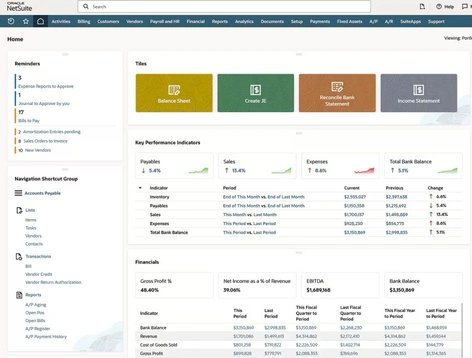
- Software Integration
Clean setup with QuickBooks, Xero, NetSuite, or A2X, so entries land in the right accounts automatically, no manual imports.
HOW IT WORKS
What Working With Our Shopify Bookkeepers Looks Like
Shopify Accounting Assessment
We start by digging into your store's setup, payment gateways, apps, discount codes, and inventory tracking to see where the numbers stop lining up. We surface what's broken before it costs you more.
Reconciliation & System Setup
We tie every order to your bank activity and general ledger, set up SKU-level COGS tracking, and work with the connection between your Shopify store and QuickBooks, Xero, or NetSuite, so entries land in the right accounts.
Sales Tax & Multi-Channel Cleanup
We map your sales tax obligations across the states you sell in, and consolidate any other channels, Amazon, eBay, Walmart, into one clean, unified set of books.
Real-Time Reporting & Strategy
You get up-to-date dashboards on cash flow, margins, and product performance, plus a dedicated point of contact, so you can see your numbers and plan your next move with confidence.
How One Shopify Payout Breaks Down in Your Books
Illustrative example only, not client data. A store receives a $9,810 Shopify Payments payout. Booking it as $9,810 of sales overstates revenue and hides money you owe the state, because part of that payout is sales tax.
| Line in the payout | Amount | Where it goes in the books |
|---|---|---|
| Gross product sales | $10,000 | Revenue |
| Discount codes | −$500 | Contra-revenue (reduces sales) |
| Refunds to customers | −$300 | Contra-revenue (reduces sales) |
| Shipping charged to customers | +$400 | Shipping revenue |
| Sales tax collected from customers | +$600 | Sales tax payable (a liability you remit to the state) |
| Payment processing fees | −$290 | Merchant fee expense |
| Chargeback | −$100 | Chargeback loss |
| Net payout to your bank | $9,810 | Cash |
Unlike Amazon, Shopify doesn't remit sales tax for you: the $600 belongs to the state until you file. Cost of goods sold is calculated separately: beginning inventory + purchases (including freight and duties) − ending inventory = COGS. Ledger Labs records every line each month, so your P&L shows true sales and your balance sheet shows what you owe.
Reviews
Here's What Happens When You Work With Us!
Why Do Sellers Switch Their Shopify Accountant to Ledger Labs?
Many Shopify sellers seek our help after a generalist bookkeeper combines their payment gateways, discounts, and refunds into one confusing line. This process makes it hard for them to see their true profit margins.
| Feature | Ledger Labs' Bookkeeping Services for Shopify Sellers | Other Services |
|---|---|---|
| Order to GL Reconciliation | Every Shopify order batch ties to bank activity and the general ledger. Gross sales, discounts, shipping income, taxes, fees, and gift cards reconcile to Shopify reports with a clear trail. | Month end bulk entries based on deposits. Discounts, shipping, and fees grouped together. Variances appear with no reliable link back to orders. |
| Payment Gateway Payouts | Payouts from Shopify Payments, Stripe, PayPal, and other gateways matched to orders and to each payout's settlement report. Fees, refunds, disputes, and reserves posted to the right accounts. Balances agree to statements. | Shopify payouts booked as income when the deposit lands. Fees and refunds sorted out later. Suspense accounts grow and need cleanup at close. |
| Sales and Revenue Tracking | Revenue segmented by product group, variant, channel, and promotion. Gross, returns, and net shown separately so trends are easy to read. | Single revenue line. Returns and promotions distort totals. Trend reviews require manual spreadsheets. |
| Refunds, Discounts, and Chargebacks | Refunds link to the original sale with tax and COGS reversals when applicable. Discount codes tracked. Chargebacks posted with related fees and tied back to the order. | Refunds posted as negative sales only. Taxes and COGS reversals missed. Disputes recorded as generic bank expense. |
| Inventory and COGS Accuracy | Stock keeping unit (SKU) level costing using FIFO or weighted average as selected, including stock held at 3PLs. Receipts, adjustments, and write offs tie to sub ledgers and the GL so margins remain readable. | COGS set from rough percentages. Unit costs drift. Inventory and GL do not match at close. |
| Expense and Vendor Management | Vendor bills captured, coded, and matched to purchase orders or receipts. Recurring costs reviewed so cash outflows stay predictable. | Bills for apps, shipping and inventory entered without matching or coding rules. Recurring app and ad costs swing month to month. Forecasting stays unclear. |
| Sales Tax and Compliance | Sales tax mapped to liability accounts. Economic nexus tracked by state as sales grow. Filing calendars tracked. Reports prepared to match portal totals for each state or country. | Sales tax held in revenue or posted loosely. Filing numbers do not match collections. Notices and penalties become common. |
| Multi Channel Consolidation | Shopify plus marketplaces like Amazon, eBay, Etsy, or Walmart consolidated with a consistent chart of accounts, with marketplace fees posted to their own accounts. Channel views remain available for reviews. | Separate files per channel with inconsistent coding. Roll ups require manual work each month. |
| Multi Currency and FX | Foreign currency sales and payouts translated with recorded rates. FX gains and losses posted clearly so product margins remain readable. | Sales in other currencies booked at the deposit value only. Exchange differences sit hidden in miscellaneous expense. |
| Financial Reports and Insights | P and L, balance sheet, and cash flow with supporting schedules. Views for net sales, returns, discounts, contribution margin, AOV, and product or channel trends. | Generic statements with limited detail. Changes are hard to explain. Decisions rely on guesswork. |
| Cash Flow Visibility | Shopify payouts, inventory buys, ad spend and operating costs shown by week and month. Owners can see when cash tightens and why. | Payouts treated as income. No timing view on holds or reserves. Cash surprises near payroll or tax dates. |
| Integrations and Setup | Clean mappings with Shopify and tools like QuickBooks, Xero, NetSuite, and A2X. Entries land in the right accounts on first pass. Exceptions reviewed and corrected. | CSV imports without controls. Data posted to catch all accounts. Cleanup required at close. |
| Month End Close and Audit Trail | Bank, gateways, inventory, receivables, payables, and tax reconciled. Source files attached. Reviews logged so handoffs remain smooth. Books close one week after month end. Onboarding takes from two weeks to a maximum of twelve, depending on the state of your books and systems. | Ad hoc close in spreadsheets. Limited backup for entries. Rework increases at year end. |
| Payroll and Team Payments | Contractors and staff recorded in the right accounts. Payroll summaries agree to the bank and the general ledger. Employer taxes and benefits land in the right cost centers. | Payroll and contractor costs booked as one lump sum. Taxes and benefits posted later. Cost centers are inaccurate. |
| Dedicated Support | One point of contact who knows your Shopify setup, flags issues early, and schedules reviews so owners have clear next steps. | Ticket queue with rotating staff. Context gets lost between messages. |
| Flat Monthly Pricing | One predictable monthly fee covers Shopify bookkeeping, reconciliations, close support, and reporting. No surprise add ons. | Hourly billing and per task adders. Costs rise when you ask for help. |
Team You Can Count On

Gary Jain
Founder & CEO
Gary is the Founder & CEO of Ledger Labs, which he started in 2014. With over a decade in accounting, he oversees CFO services, ERP accounting, and finance automation for ecommerce, CPG, and manufacturing businesses in the United States. He is also a council member of Forbes.

Allison Rinehimer
CPA | Operations Manager
Allison is a (CPA) and a member of the AICPA. She oversees operations at Ledger Labs, where every close follows a written checklist with a named owner and deadline. With experience in both public and private accounting, she builds scalable systems that support fast-growing ecommerce businesses.

Sam Carter
CPA
Sam Carter, CPA, is an Accountant at Ledger Labs, specializing in NetSuite and QuickBooks-based bookkeeping, reconciliations and revenue recognition for growing businesses. He brings a strong grounding in U.S. GAAP reporting, internal controls and corporate finance to every client engagement.
Accounting Software We Work In


zoho inventory


Odoo


Shopify

Our Testimonials
Hear from More Business Owners Who Were in Your Exact Position
Find out what our customers are saying about our services.
We started selling into a dozen states, and I had no idea I was supposed to be filing in most of them. Ledger Labs mapped out exactly where we owed and got us compliant before it became a real problem. That mistake could've cost us penalties for years.
Camila Dorsett OwnerI was pricing products based on rough guesses because I never actually knew my true cost of goods. Ledger Labs set up SKU-level COGS tracking, and it turned out one of my top sellers had almost no margin left after real costs. I repriced it immediately.
Julian Ashworth-Reyes CEOWe sell on Shopify, Amazon, and Etsy, and each platform told a completely different financial story. Ledger Labs consolidated everything into one set of books. Now I actually see the whole business instead of three disconnected pictures.
Priya Vandenberg Co-Founder
FAQ
Shopify Bookkeeping Questions We Get A Lot
1. What do bookkeeping services for Shopify sellers actually include?
Our bookkeeping services for Shopify sellers cover reconciling every order to your bank and payment gateways, tracking inventory and COGS at the SKU level, managing sales tax across states and countries, and delivering financial reports you can act on. It’s different from generic bookkeeping because Shopify’s data includes discounts, refunds, gift cards, and multi-currency payments, and these don’t map cleanly to a simple deposit.
2. Why can't my regular bookkeeper handle my Shopify store?
Because Shopify isn’t standard bookkeeping, discounts, refunds, chargebacks, and multi-gateway payouts all need specific handling that a generalist often lumps into one line. That hides your true margins and can mean sales tax filed incorrectly. Shopify-specific accounting untangles all of it at the transaction level.
3. Can you reconcile Shopify payouts and our other payment gateways?
Yes. We match payouts from Shopify Payments, Stripe, PayPal, and other gateways to your actual orders, fees, refunds, and disputes posted to the right accounts, so your bank balance and your books finally agree.
4. Do you handle sales tax for Shopify stores?
Yes, we calculate, file, and remit sales tax for the US states where you’re obligated, and track your filing calendar. Multi-jurisdiction sales tax is one of the most common reasons Shopify sellers come to us.
5. Can you keep Shopify inventory and cost of goods sold in line with the books?
Yes, we use SKU-level costing (FIFO or weighted average), so your cost of goods sold reflects real inventory movement, not a rough percentage estimate. This is usually where sellers discover their real margins are different from what they assumed.
6. Do you consolidate Shopify with other sales channels?
Yes. If you also sell on Amazon, eBay, TikTok Shop, Etsy, or Walmart, we consolidate everything into one consistent set of books, including multi-currency sales and FX gains and losses, so you see the whole business, not fragmented channel reports.
7. Can you connect Shopify to QuickBooks or Xero?
Yes, we work with the integrations between Shopify and QuickBooks, Xero, NetSuite, or A2X, so order and payout data flows in and we review the exceptions each month. A2X groups each Shopify Payments payout into gross sales, discounts, shipping income, taxes, gateway fees and refunds before it reaches the ledger, so the payout in your bank ties to the order batch behind it. A direct QuickBooks or Xero connector posts the deposit as a single entry instead.
8. Do you work with sellers on Shopify and other marketplaces?
Yes, see our full ecommerce accounting services for the multi-channel picture if you sell beyond Shopify.
9. What do bookkeeping services for Shopify sellers cost?
It depends on your order volume, number of sales channels, and whether you need payroll handled too, so published “average” figures rarely match what you’ll actually pay. Rather than bill hourly, we scope your needs and quote a clear flat monthly fee. See our starting plans on the pricing page.
Blogs
Our Thought Leadership
Our multidimensional experience and wide exposure have been channelized beautifully in these articles!

See What Happens When You Work With Us
From saving thousands to scaling fast, these stories highlight how we help businesses grow smarter with real financial strategy and execution.

Empowering Business Confidence Through Precision and Insight

Navigating Financial Complexity to Secure Investment



I had trouble figuring out which payouts from Shopify Payments, Stripe, and PayPal matched my orders. Ledger Labs connected each payment gateway to my actual sales, including the fees. Now, my financial records balance, and I no longer have to guess at the end of each month.
Tobias Renwick Founder